1933–1945
The colony and the war
The completed colony, the summer sessions, then the orphans evacuated from Milan
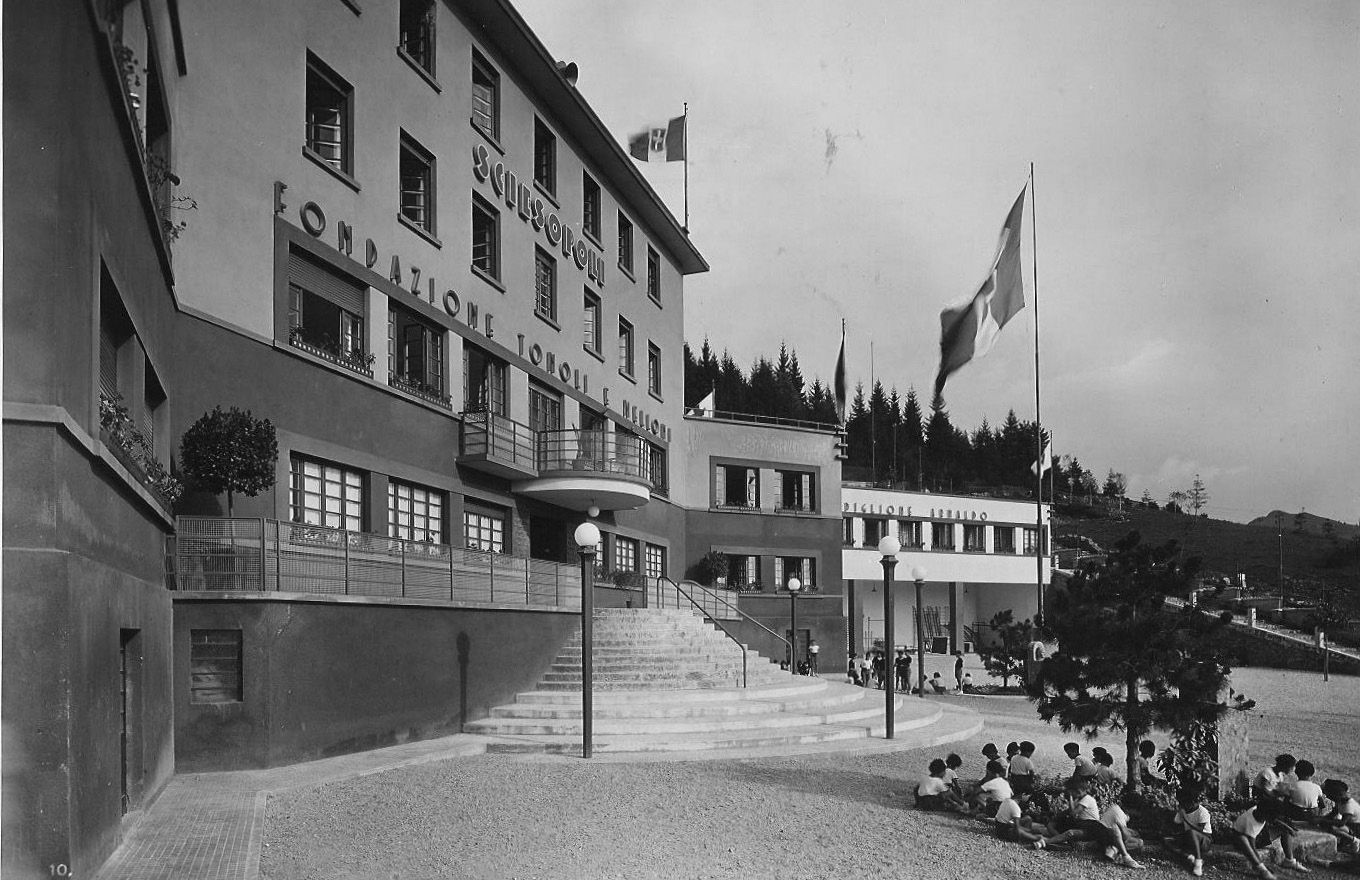
By the summer of 1934, writes the historian Elena Pirazzoli, the colony was complete: four pavilions of several floors, aligned from north to south and facing the sun, with about 250 beds. Next to the general services stood the Arnaldo, named after Mussolini’s brother, with the infirmary, the laundry and a portico for gymnastics; the Dux, with a heated swimming pool and a hall for recreation and films, dedicated to the tenth anniversary of the Fascist era; and the Fabrizio, with 120 beds. According to the decree and to Pirazzoli the name recalls Fabrizio Ciano, Mussolini’s grandson; an article of 1933 also mentions a son of Mataloni, named Fabrizio, who had died.
Sciesopoli was part of the regime’s large programme of seaside and mountain colonies, whose aims were both welfare and propaganda. Its architecture is rationalist in style, with a reinforced-concrete frame, flat roofs and large windows: the decree describes the Dux as “almost a large glass box resting on a high base”. But it also served the Fascist liturgy. The gate has four pillars shaped like fasces, once joined by a wooden walkway on which children in uniform stood guard in turns. The plaster was Pompeian red and ochre yellow, with green frames; the Arnaldo was white, and the electric blue planned for the Dux was never carried out.
In 1940 and 1941 Sciesopoli was featured in architecture magazines, first in “Edilizia Moderna” and then in the issue of “Costruzioni Casabella” devoted to mountain colonies. The 2015 decree takes this as placing Sciesopoli “in the short list of the best works” of the 1930s, but the text of the critic Mario Labò is severe on the plan and praises only the interiors.
Who went to the colony
The colony was run by the Foundation, within the orbit of the Sciesa group, and operated in summer, in successive sessions. No published statistics are known for Vietti-Violi’s colony: in 1931–1932, when the wooden pavilions were still standing, the group had sent 227 children there.
Propaganda spoke of “children of the people”, and the Foundation said it wanted to take in “poor children in need of care”; in a Luce newsreel girls can also be seen leaving, alongside the Balilla boys. The historian Sara Ribolletti, however, describes it as a colony for “the children of deserving Fascists”, and Luigi Gorini’s biographers remember it as a summer colony for the children of Fascists. The reading most consistent with the sources is one of care for poor or frail children, chosen, however, within the network of the group and the party.
For the children’s health there were the terrace for sun cures, the clinic, the infirmary and isolation rooms. But for the medicine of the time summer colonies were not places of treatment: they had a “mainly preventive purpose”, that is, they were meant to strengthen children so as to prevent disease.
What daily life was like in the new colony we do not know: the military-style chronicles of 1927 and 1928 concern the wooden pavilions, there are no similar accounts for the 1930s, and no testimonies have been found from people who stayed there as children. Almost all the sources of the period are propaganda: newsletters, newspapers, newsreels.
The war and the Liberation
What happened to the colony in the first years of the war is not clear. According to Pirazzoli and Ribolletti it went on taking in children referred by the Fascist organization in Milan, less and less often. The writer Aurora Cantini, author of a book on the colony, writes instead that once Italy entered the war the children no longer came up for their holidays, and that from 1941 the home took in orphans evacuated from Milan. No documents of the time have been found that settle the question.
The known contract dates from 1 April 1943: the Foundation leased the colony for a year, for 50,000 lire, to the Opera Pia Fanciulli Gracili of Milan, a charity for frail children, which evacuated war orphans and children “more predisposed to tuberculosis” there. In all probability this was the Convitto fanciulli gracili e orfani di guerra, a boarding school for frail children and war orphans in Affori, on the outskirts of Milan, now the Istituto Achille Ricci: the history published by the institute and an article by the scholar Stefano Pasta record that during the war its children were evacuated to Selvino, while the building in Affori became an air-raid shelter. The institute, like Cantini, dates the evacuation to 1941. The home, writes Pirazzoli, was run by the Missionary Zelatrices of the Sacred Heart, also known as the Apostles of the Sacred Heart: the same congregation that worked in the Affori boarding school from the 1920s until 2007. A room next to the entrance hall became a chapel. After 8 September 1943, the armistice, the home stayed open all year, with a primary school inside.
No trace has been found of military requisitions, either German or by the Italian Social Republic. The war did, however, reach its architect: in February 1943 the bombing raids destroyed Vietti-Violi’s studio in Milan, and in the autumn of 1944 he was mayor of Vogogna during the partisan Republic of Ossola.
Right after the Liberation the Intendenza di finanza of Bergamo, the State’s local finance office, requisitioned the complex, believing it to be property of the Fascist party. But the owner was an independent ente morale, and the requisition was revoked. The decree of 2 August 1943 that had dissolved the Fascist party had transferred its assets to the State, but it did not name bodies with their own legal personality and assets, such as the Foundation. With a decree of the prefect of Milan of 28 June 1945 and a measure of the mayor of 12 July, the Foundation was placed under a commissioner, Luigi Gorini, a biologist and the Socialist party’s representative on the Comitato di liberazione nazionale (CLN), the National Liberation Committee, who took office on 15 July. The prefect was Riccardo Lombardi, the mayor Antonio Greppi.
On 7 November 1945 the Opera Pia’s orphans left Selvino. On the same day the commissioner resolved to lease the colony to the Jewish Community of Milan, for one year starting on 20 September, for 250,000 lire. The dates leave two possibilities open: that for a few weeks the orphans and the first Jewish children lived together in the colony, or that the contract put in writing, afterwards, a situation already under way. Two clues can be added. The first issue of Nivenu, the Jewish children’s newsletter, is dated 27 October, when according to the records the orphans were still in Selvino. And the Israeli writer Aharon Megged recounts that when a Jewish delegation first went up to see the house, it found some nuns there who were looking after war orphans and were about to take them back to Milan. Archive papers may clarify this.
In Vietti Violi's Sciesopoli of Selvino, conceptual utilitarianism stopped short of an architectural result. […] More satisfying are individual aspects of the interiors: the swimming pool, the dormitories, the verandas enclosed with double glazing for possible winter use.
Nella Sciesopoli di Selvino di Vietti Violi, l'utilitarismo concettuale si è fermato prima di avere raggiunto un risultato architettonico. […] Più appagano gli aspetti singoli degli interni, la piscina, i dormitorii, le verande chiuse a doppi vetri per eventuali usi invernali.
The Fondazione Tonoli e Melloni was never absorbed either by the Opera nazionale Balilla (ONB) or by the Gioventù italiana del Littorio (GIL) [the Fascist youth organizations]: this peculiarity shaped the destiny of Sciesopoli.
La Fondazione Tonoli e Melloni non verrà mai assorbita né dall'Opera nazionale Balilla (ONB), né dalla Gioventù italiana del Littorio (GIL): questa peculiarità ha segnato il destino di Sciesopoli.
The Second World War, with the evacuation of the children to Selvino (BG) and the conversion [of the building] into an air-raid shelter for the neighbourhood, and the economic hardship of the post-war years marked a difficult period, while the institution continued to provide high-quality nursery, primary and vocational education.
La Seconda guerra mondiale, con lo sfollamento a Selvino (BG) dei ragazzi e la trasformazione in rifugio antiaereo per il quartiere, e le ristrettezze economiche del Dopoguerra caratterizzarono un periodo difficile, senza che l'Ente rinunciasse a una scuola materna, elementare e di avviamento professionale di qualità.
Images
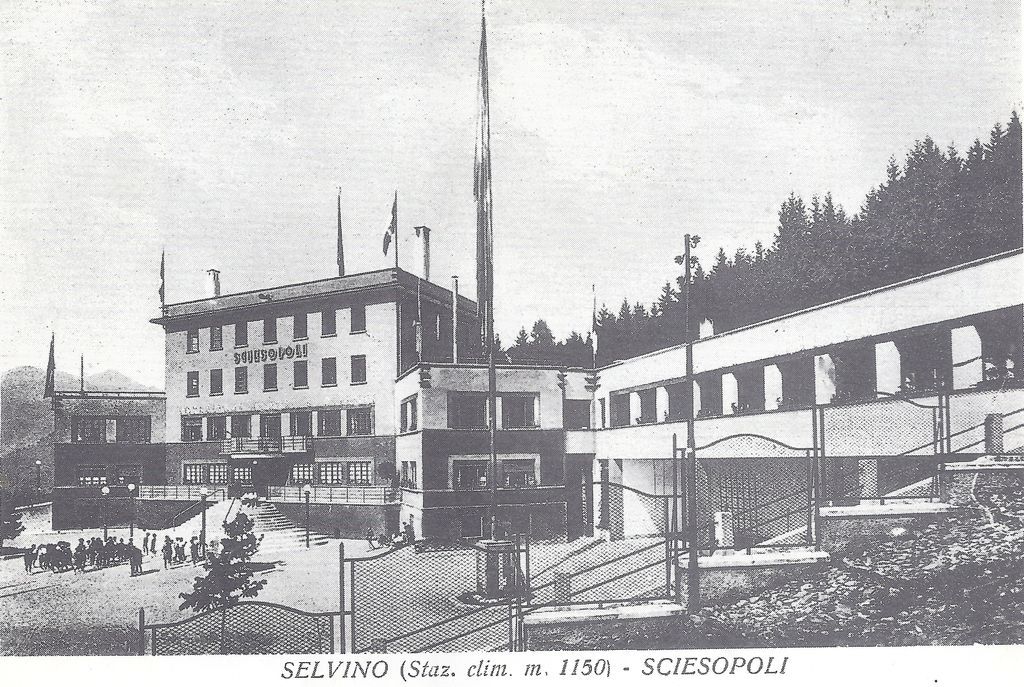
Postcard “Selvino (Staz. clim. m. 1150) – Sciesopoli”, about 1934–1943 (the Arnaldo pavilion has already been built). Collezione B. Pasinelli – sciesopoli.com; editore non indicato 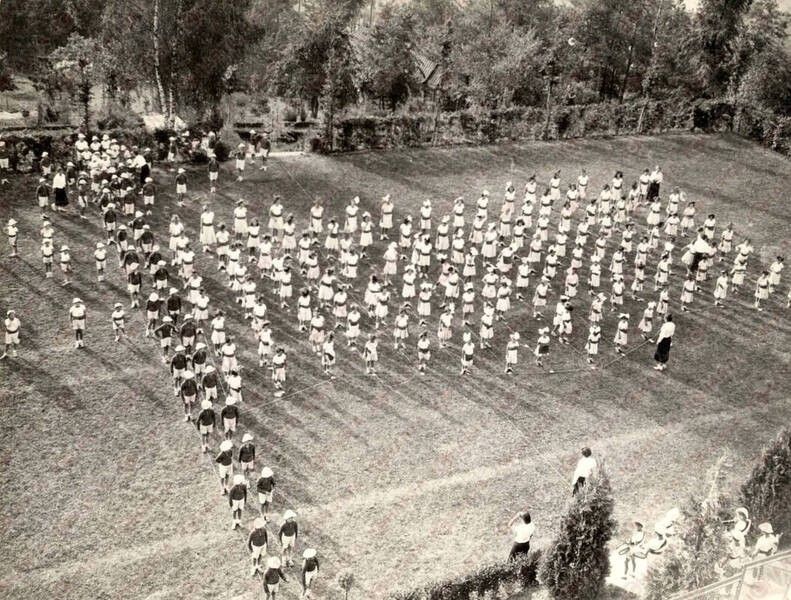
Gymnastic exercises on the colony's lawn, 1936 (according to sciesopoli.com). Collezione B. Pasinelli – sciesopoli.com 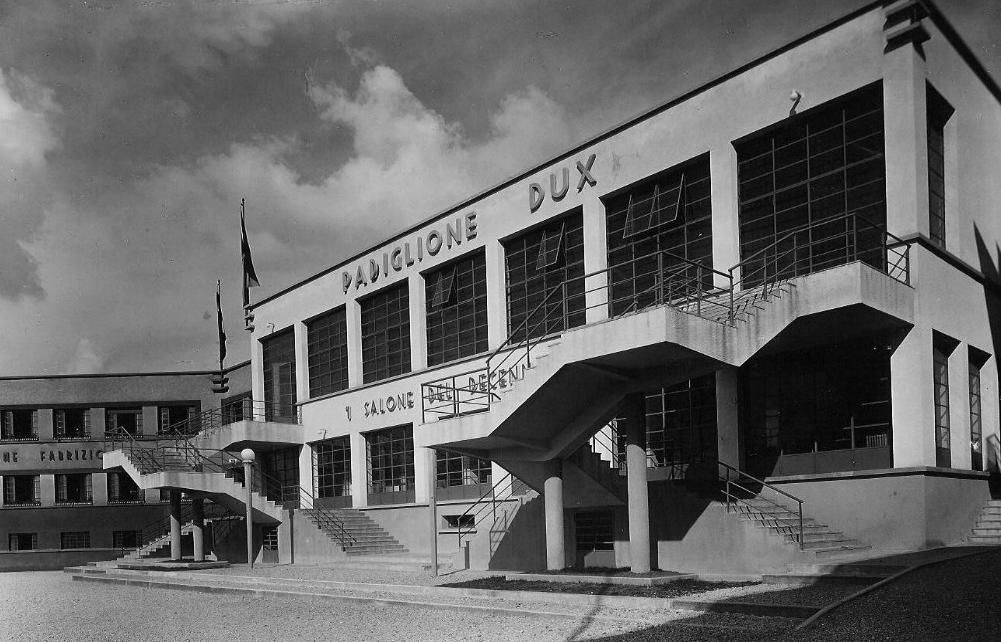
The Dux pavilion and the window of the “Salone del Decennale”, 1930s. Archivio da individuare; progetto di Paolo Vietti-Violi 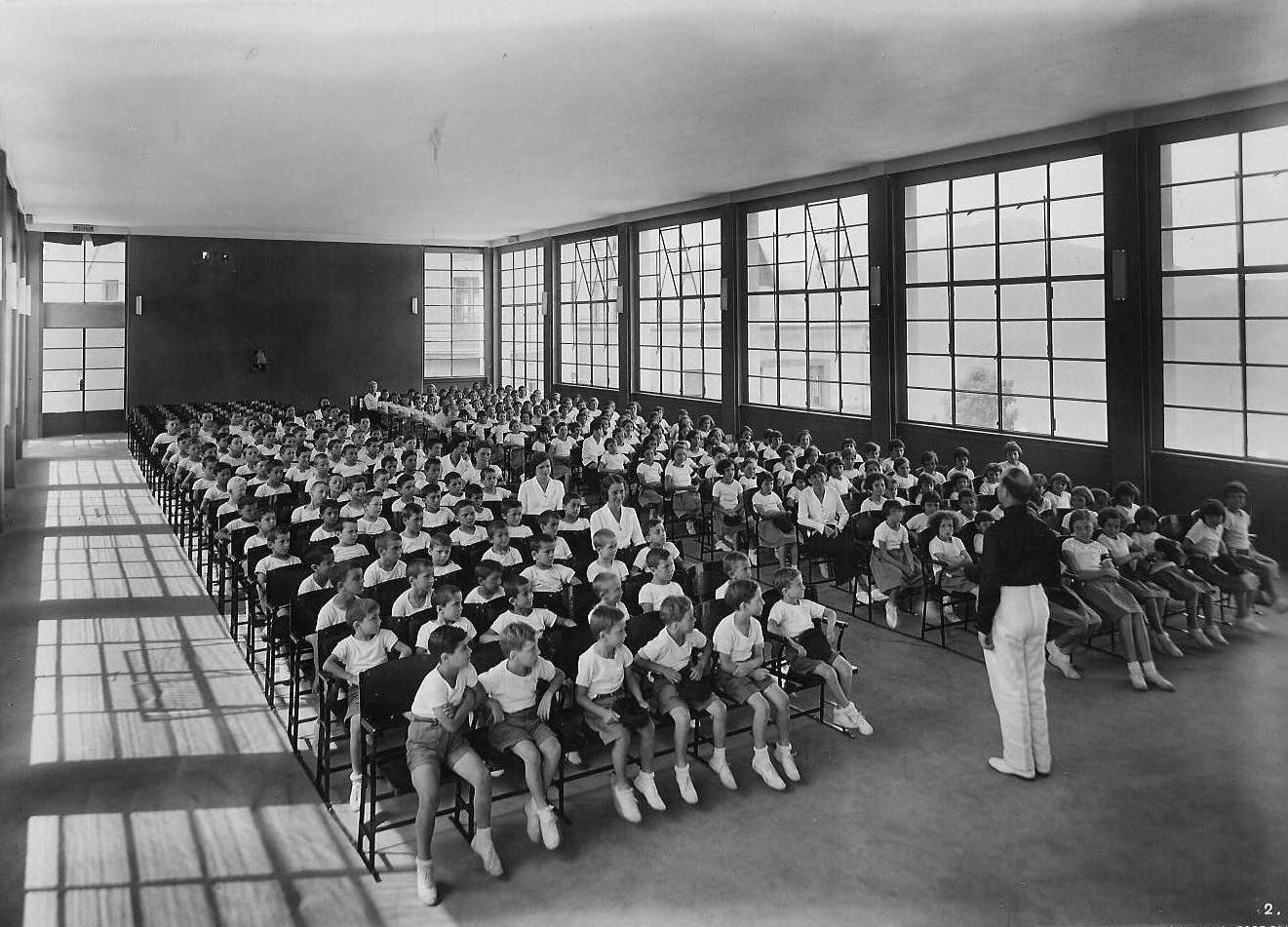
The hall of the Dux pavilion with the children of the colony, 1930s. Archivio da individuare; progetto di Paolo Vietti-Violi 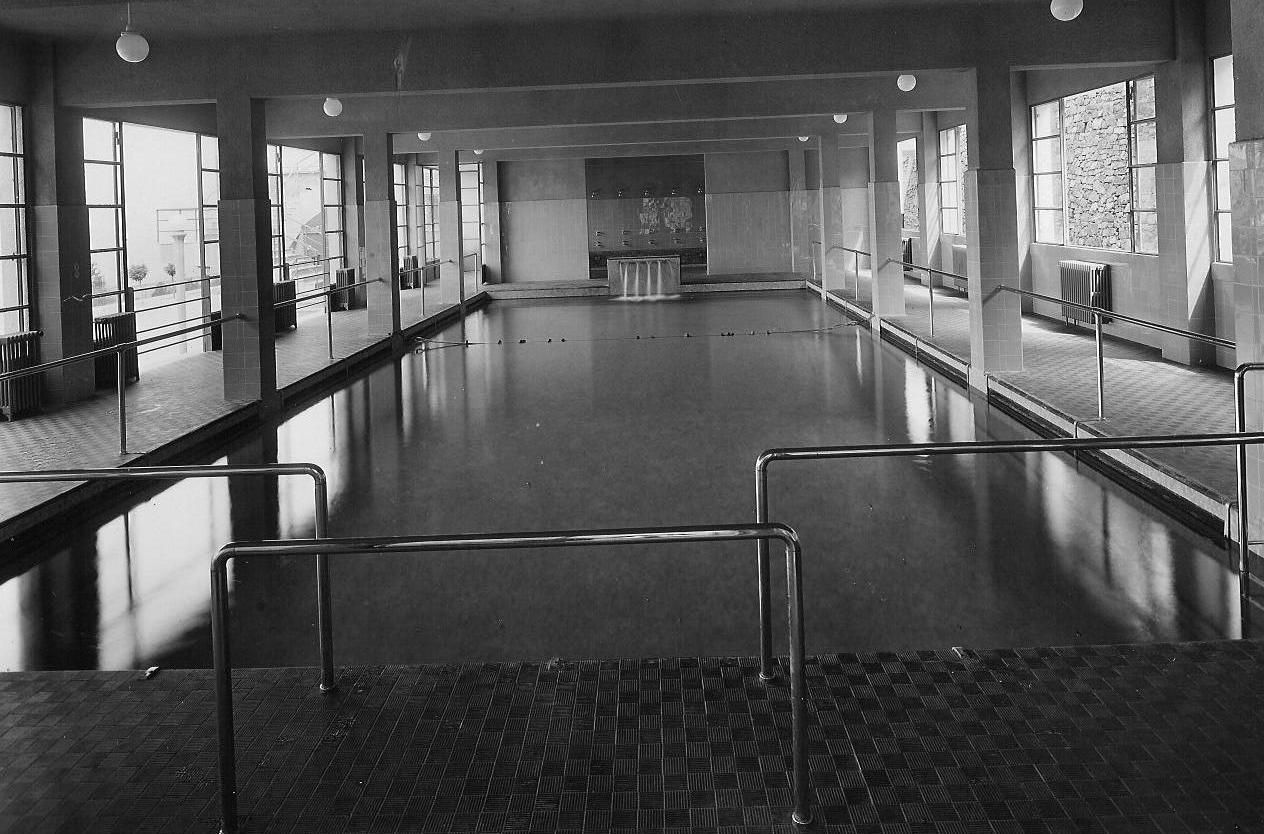
The heated swimming pool of the Dux pavilion, 1930s. Archivio da individuare; progetto di Paolo Vietti-Violi 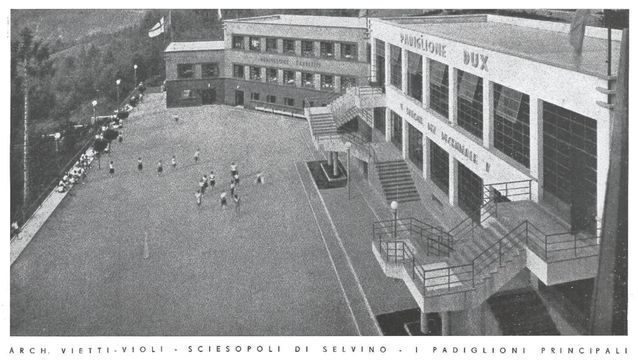
The main pavilions, photograph published in December 1941. «Costruzioni Casabella», n. 168, p. 5, articolo di Mario Labò; progetto di Paolo Vietti-Violi 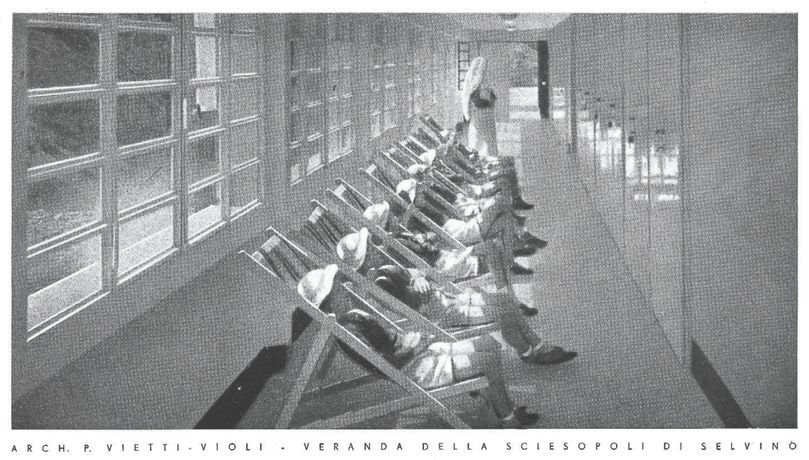
The veranda, photograph published in December 1941. «Costruzioni Casabella», n. 168, p. 6, articolo di Mario Labò; progetto di Paolo Vietti-Violi 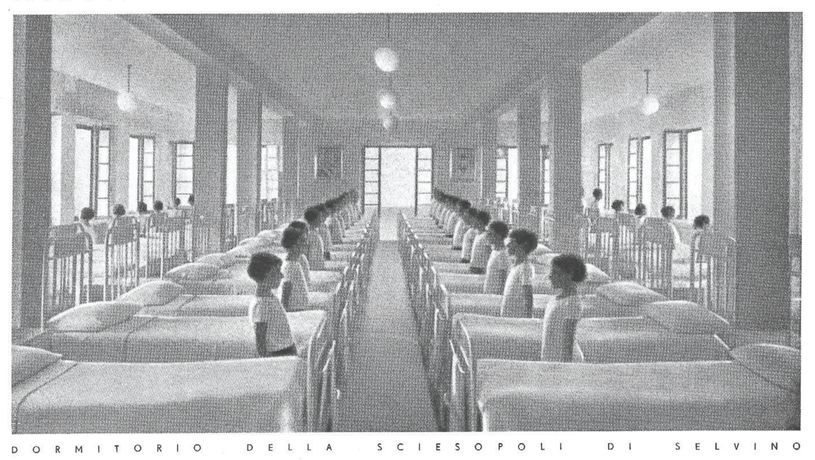
The dormitory, photograph published in December 1941. «Costruzioni Casabella», n. 168, p. 6, articolo di Mario Labò; progetto di Paolo Vietti-Violi
Archive films
- A group of children leaves the Sciesopoli colony
Archivio Storico Luce, Giornale Luce B0323 · 1933 · 1 min 15 s
Newsreel made for the regime's propaganda.
A video loads only when you press “Watch here”: from then on YouTube receives data about your visit, as explained on the Privacy page.
Key dates
- 1934
- The Società Immobiliare Selvino donates the complex to the Fondazione Tonoli e Melloni, which owns it until 1987 (2015 decree)
- summer 1934
- The colony is complete, with four pavilions (Pirazzoli 2024, p. 261)
- December 1941
- Mario Labò writes about Sciesopoli in the issue of “Costruzioni Casabella” devoted to mountain colonies (Pirazzoli 2024, p. 262)
- 1 April 1943
- The colony is leased to the Opera Pia Fanciulli Gracili of Milan, which evacuates its children there (Ribolletti 2019, p. 107)
- after 8 September 1943
- The home stays open all year, with a primary school (Pirazzoli 2024, p. 265)
- 28 June 1945
- A decree of the prefect of Milan, followed on 12 July by a measure of the mayor, places the Foundation under a commissioner, Luigi Gorini (Ribolletti 2019, p. 108)
- 7 November 1945
- The Opera Pia's orphans leave Selvino; the colony is leased to the Jewish Community of Milan from 20 September (Ribolletti 2019, p. 108)
People
- Mario Labò, architecture critic, wrote about Sciesopoli in 1941 (Pirazzoli 2024, p. 262)
- Luigi Gorini, biologist, Socialist representative on the Comitato di liberazione nazionale (CLN), commissioner of the Foundation from 15 July 1945 (Ribolletti 2019, p. 108)
Sources
- S. Ribolletti, «Con la volontà dura come la roccia». Sciesopoli, una «colonia alpina per i bimbi del popolo» nell'Italia fascista, RomaTrE-Press, 2019.
- E. Pirazzoli, «L'orizzonte dopo la catastrofe. Sciesopoli da colonia fascista a centro per giovani profughi ebrei, e oltre», in_bo, 15/19, 2024.
- Segretariato regionale MiBACT per la Lombardia, decreto di dichiarazione dell'interesse culturale della «Ex Colonia Montana Sciesopoli», 25 novembre 2015, relazione storico-artistica.
- M. Labò, «Le colonie montane», «Costruzioni Casabella», n. 168, dicembre 1941 (citato da Pirazzoli 2024).
- J. Beckwith, D. Fraenkel, Luigi Gorini 1903–1976, National Academy of Sciences, Biographical Memoir, 1980.
- Regio decreto-legge 2 agosto 1943, n. 704, sulla soppressione del Partito nazionale fascista.
- S. Pasta, «Istituto Achille Ricci: da “Convitto Fanciulli Gracili e Orfani di Guerra” a “University College School”», «Formazione & Insegnamento», XVIII, 1s, 2020.
- Istituto Achille Ricci, pagina «La Storia Centenaria» del sito istituzionale, consultata il 28 ottobre 2026.
- A. Cantini, «Medaglia della Bocconi alla poesia “I Bambini di Gorla”, la strage della scuola elementare del 1944», blog «Le Ali dell'Aurora», 24 novembre 2025.
- A. Megged, Il viaggio verso la terra promessa. La storia dei bambini di Selvino, Mazzotta, 1997 (edizione originale in ebraico, Am Oved, 1984).
Further reading
From 1934 to 1987 the former colony had a single owner, a Milanese welfare body. The other bodies leased it, ran it or sent children there, without ever owning it.
Collecting memories
We are collecting memories, photographs and documents from people who lived or worked in the former colony in Selvino, to tell its whole story.