1945–1948
The Children of Selvino
A home for young Holocaust survivors waiting to leave for Palestine
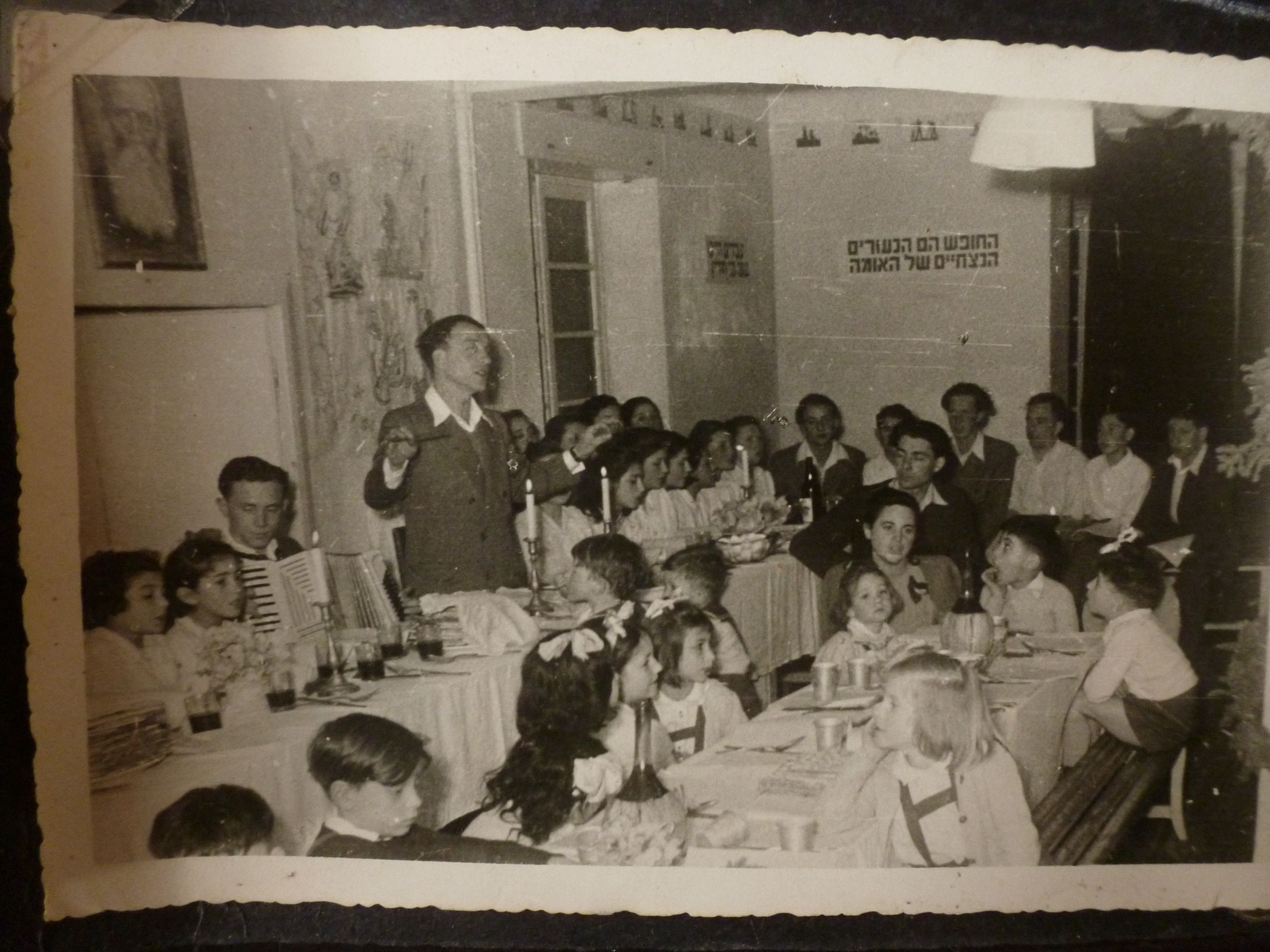
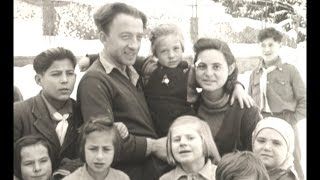
From September 1945 to the end of 1948 the former colony of the Sciesa group took in, in all, about eight hundred Jewish children and young people who had survived the Holocaust. They came from all over Europe, above all from the East, from the camps, the forests, the monasteries and the other places where they had hidden, as Yad Vashem writes. The youngest were three or four years old, the oldest seventeen or eighteen, and many were orphans. Eight hundred is the figure most often cited; Gorini’s biographers speak of about a thousand, and the sources consulted do not say how they were counted.
In the summer of 1945 many survivors were arriving in Italy hoping to reach Palestine. The Jewish Community of Milan took them in with the help of Jewish soldiers from Palestine, then under British Mandate, who served in the British Army. Its offices were at Via Unione 5, in Palazzo Odescalchi, which the CLN, the National Liberation Committee, had granted it: until shortly before, it had been the headquarters of the Sciesa group, the same group that had founded the colony. The children were staying in Milan, in Magenta and in a summer home in Piazzatorre, but there was not enough room.
So Raffaele Cantoni, head of the Community, urged by Moshe Zeiri and Teddy Be’eri, asked Luigi Gorini, the commissioner of the Foundation that owned the colony, whether Sciesopoli could be used. Gorini agreed, with the approval of the prefect Riccardo Lombardi and of the mayor of Milan Antonio Greppi: the colony was leased to the Community from 20 September 1945, for 250,000 lire a year, and the first to move in were the children from Piazzatorre. In the memories of those involved, collected in the 1980s by the writer Aharon Megged, the rent has become symbolic, one dollar a month: it is a tradition, not what the contract says.
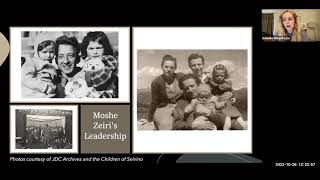
The home was directed by Moshe Zeiri, a Jewish soldier who had come from Palestine with the British Army: he belonged to the 745th Company of the Royal Engineers, known as “Solel Boneh”. He was a soldier, not an officer as some sources say. Working with him were his wife Yehudit, Teddy Be’eri and Gary Bertini, later a famous conductor. Relations with the authorities were handled by Gorini and the biologist Annamaria Torriani, his colleague and later his wife: Gorini, his biographers recall, was the administrator in name, but above all a friend and an adviser.
The home was helped by Gordonia, a Zionist youth movement of socialist inspiration, by Youth Aliyah, by the American Jewish Joint Distribution Committee, known as the Joint, and by the soldiers. In the first months food was scarce, and aid came from the United Nations Relief and Rehabilitation Administration (UNRRA) and from the rations of the Jewish units of the British Army.
Life in the home
The home worked as a self-managed community, on the kibbutz model. The children studied; the older ones did maintenance work and looked after the younger ones. Among themselves they spoke Polish, Yiddish or Hungarian, but cultural life took place in Hebrew. Zeiri built a method that combined the Hebrew language and culture with theatre, music, painting and craft work, within a Zionist and socialist education founded on communal life, cooperation and mutual responsibility.
Shabbat and the Jewish holidays were celebrated, Zeiri conducted the choir and the home had its own newsletter, Nivenu. Every day, on the square that Vietti-Violi had designed for the regime’s ceremonies, the flag with the Star of David was raised. In the entrance hall the plaques with the names of the colony’s funders remained, with Mussolini at the top.
Selvino, Gorini’s biographers later wrote, was meant to help them regain confidence before leaving. Many testimonies tell of the joy of becoming children again. The historian Sergio Luzzatto, who reconstructed the story from Zeiri’s letters, has also shown its price: the old identity the youngsters were asked to leave behind was all they had left of the families they had lost.
The departures
The youngsters left in groups for Palestine, then under British Mandate: some with proper papers, others through clandestine immigration, the aliyah bet, which defied British restrictions. For many, the journey involved capture by the British and internment camps. On arrival they joined Youth Aliyah groups and kibbutzim; many of the older ones fought in the 1948 war, in which the State of Israel was born. Many, Luzzatto observes, later left the kibbutzim for the city. The last group left Selvino at the end of 1948. On 5 October, preparing the new lease, the Foundation had written that the colony was soon to be vacated “by the American Joint”, as had been announced: in the end it named as the occupant the American Jewish organization that supported the home, not the Community. The papers consulted do not explain why.
It took two weeks, no longer, and we were restored to our original age. I think that one of the main things about Selvino… was that this house – for the time period that we were there, a little more than a year – gave us back our youth…
The house was very beautiful, like a palace for us, very tidy, blue beds and clean, and there was a pool there. After everything we'd been through, we arrived at such a luxurious house…
Images
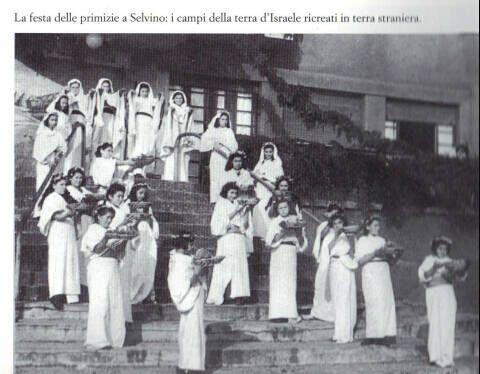
The festival of first fruits, 1946–1948. Da A. Megged, «Il viaggio verso la Terra Promessa. La storia dei bambini di Selvino», Milano, Mazzotta, 1997 (© 1985 Am Oved Publishers Ltd.; edizione italiana © Edizioni Gabriele Mazzotta)
Videos and testimonies
On YouTube and RaiPlay, on the channels of those who made them.
- Testimony: Shabbat in the home
Yad Vashem · 2015 · 2 min 32 s · Hebrew, English subtitles
One of the testimonies recorded by Yad Vashem for its online exhibition on Selvino; the others are in the exhibition.
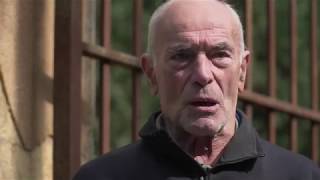
- The Story of a House: Home of the Children of Selvino
Children of Selvino · 2021 · 31 min 50 s · Hebrew, English subtitles
Documentary with the testimonies of the Children of Selvino, on their association's channel.
- Danielle Willard-Kyle: the JDC and Selvino, 1945–1948
JDC Archives · 2022 · 1 h 1 min 25 s · English
Lecture for the archives of the American Jewish Joint Distribution Committee.
- La casa dei bambini, the documentary trailer
Archivio Luce Cinecittà · 2019 · 1 min 16 s · Italian
Documentary by Francesca Muci.
- La casa dei bambini
Rai Storia · 2018; on RaiPlay from 13 October 2025 · 1 h 5 min 36 s · Italian
Documentary by Francesca Muci on the story of the children of Selvino, broadcast by Rai Storia.
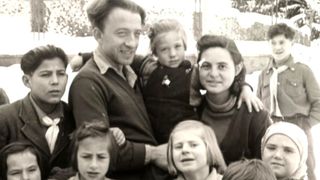
- Moshe Zeiri e i ragazzi del Kibbutz Selvino
«Quante storie», Rai 3 · 26 January 2018 · 29 min 24 s · Italian
Episode dedicated to Moshe Zeiri and the young people of Selvino.
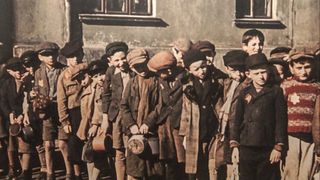
- Sciesopoli Selvino 1946
Tami Sharon · 1946; uploaded on 8 April 2016 · 8 min 56 s · Hebrew, English captions
Footage shot in 1946 in the children's home; description and captions in Hebrew and English.
A video loads only when you press “Watch here”: from then on YouTube receives data about your visit, as explained on the Privacy page.
Key dates
- summer 1945
- In Piazzatorre a summer home takes in orphaned Jewish children: they will be the first to move to Selvino (Yad Vashem, online exhibition)
- 20 September 1945
- The lease of Sciesopoli to the Jewish Community of Milan takes effect (Ribolletti 2019, p. 108)
- end of 1945
- The Achva group, thirty Hebrew-speaking youngsters, arrives from Łódź (Yad Vashem, online exhibition)
- end of 1948
- The last group of youngsters leaves Selvino (Pirazzoli 2024, p. 266)
People
- Moshe Zeiri, director of the home, a soldier of the 745th Company of the Royal Engineers in the British Army (Yad Vashem, online exhibition)
- Yehudit Zeiri, Moshe's wife, worked with him in the home (2015 decree)
- Teddy Be'eri, representative of the Palestine organizations in Milan; with Zeiri he asked for Sciesopoli for the children (Pirazzoli 2024, p. 265)
- Gary Bertini, teacher, later a conductor (2015 decree)
- Raffaele Cantoni, head of the Jewish Community of Milan (2015 decree; Pirazzoli 2024, p. 265)
- Luigi Gorini, biologist, commissioner of the Foundation that owned the colony, guarantor for the home with the authorities; later a professor at Harvard (Beckwith and Fraenkel 1980, pp. 204–205)
- Annamaria Torriani, biologist, Gorini's colleague and later his wife; later a professor at the Massachusetts Institute of Technology (Beckwith and Fraenkel 1980, p. 205)
- Shmuel Shilo, arrived in Selvino aged sixteen; his testimony is in the Yad Vashem exhibition (Yad Vashem, online exhibition)
- Rina Radocki (née Nacht), arrived with the Achva group from Łódź; her testimony is in the Yad Vashem exhibition (Yad Vashem, online exhibition)
Sources
- Yad Vashem, mostra online «Selvino – "A Colony of Eretz Israel" in the Italian Alps».
- S. Luzzatto, I bambini di Moshe. Gli orfani della Shoah e la nascita di Israele, Einaudi, 2018.
- M. Belpoliti, recensione a S. Luzzatto, I bambini di Moshe, «Doppiozero», 19 febbraio 2018.
- E. Pirazzoli, «L'orizzonte dopo la catastrofe. Sciesopoli da colonia fascista a centro per giovani profughi ebrei, e oltre», in_bo, 15/19, 2024.
- Segretariato regionale MiBACT per la Lombardia, decreto di dichiarazione dell'interesse culturale della «Ex Colonia Montana Sciesopoli», 25 novembre 2015, relazione storico-artistica.
- S. Ribolletti, «Con la volontà dura come la roccia». Sciesopoli, una «colonia alpina per i bimbi del popolo» nell'Italia fascista, RomaTrE-Press, 2019.
- J. Beckwith, D. Fraenkel, Luigi Gorini 1903–1976, National Academy of Sciences, Biographical Memoir, 1980.
- A. Megged, Il viaggio verso la terra promessa. La storia dei bambini di Selvino, Mazzotta, 1997 (edizione originale in ebraico, Am Oved, 1984).
- F. Toncelli, «I bambini della Terra Promessa», documentario nella puntata «Nazismo, l'orrore e la speranza» di «La Grande Storia», Rai 3, 28 giugno 2019 (video nella pagina di sciesopoli.com).
- «Wikiradio», RaiPlay Sound, 20 settembre 2018: «I bambini della colonia di Sciesopoli raccontati da Bruno Maida», 29 min 10 s.
Further reading
From 1934 to 1987 the former colony had a single owner, a Milanese welfare body. The other bodies leased it, ran it or sent children there, without ever owning it.
Collecting memories
We are collecting memories, photographs and documents from people who lived or worked in the former colony in Selvino, to tell its whole story.