1948–1985
After the war
Mountain health institute, school and “Scuola Natura” for the children of Milan
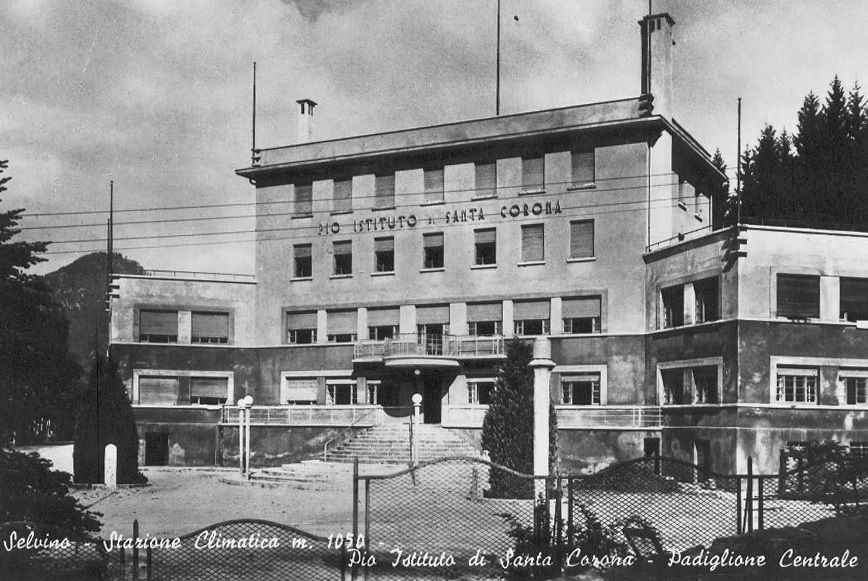
When the departure of the last Jewish youngsters was announced, the Foundation found itself, as the commissioner wrote, “completely without an organization of its own” to run an institute for minors. On 5 October 1948 Luigi Gorini resolved to entrust the colony to the Pio Istituto Santa Corona of Milan “from the day on which it is vacated”, for fifteen years and at a symbolic rent of 80,000 lire a year. It was an old institution, founded as a confraternity in 1497 and devoted to free spa and mountain-air cures. In summer the colony hosted the children of employees of companies around Milan; from October to May it was a health resort with a school. The municipality of Selvino remembers those years as the years of the “Selvino Hospital”, a school-sanatorium for children from needy families. Then too, a primary school ran inside the colony.
According to the 2015 decree, in 1950 the Foundation began to think about running the colony itself, and Santa Corona left towards the end of 1954, long before the agreed fifteen years. On 24 December 1954 a decree of the President of the Republic, no. 1521, in force from May 1955, partly changed its purpose and merged into it five other Milanese charities, as Gorini had proposed: four of them, impoverished by inflation, were no longer active. The Foundation was not dissolved: it took the name Opera pia per l’assistenza climatica all’infanzia, a charity for children’s health stays in a good climate, with the task of taking in “poor frail children living in Milan and its province”, and the colony became the Istituto Climatico Permanente di Selvino, a year-round health institute in the mountain air. So from 1934 to 1987 the owner always remained the same.
After 1954 it was the Provincial Anti-Tuberculosis Consortium of Milan that chose the children who needed a period of treatment in Selvino. In December 1965, by which time vaccination had become widespread, the body assigned the institute to the children of the City of Milan, which had been sending children there for tuberculosis vaccination since 1950. According to the 2015 decree it was run by the Dominican Sisters of Saint Catherine of Siena, as teachers and nurses, with lay staff. In summer it took in up to about 1,400 children: they were also sent by the anti-tuberculosis consortia of Monza, Como and Novara and by large companies such as the Cartiere di Verona paper mills and the Falck steelworks.
The press often speaks of a “colony of the City of Milan”, but that is a simplification. The property always remained with a Milanese welfare body: the City sent most of the children, but it was not the owner.
To make room, in 1955 the swimming pool was covered with a wooden floor. Between 1963 and 1965 a renovation adapted part of the building as a school: the great hall of the Dux was divided into seven classrooms, the pool was closed for good and the outside staircases were reduced, while the portico of the Arnaldo was closed in to make a laundry. These are the most important post-war changes to Vietti-Violi’s building. The school inside had been given equal standing with state schools in 1959 and was a state school from 1968 to 1978.
The agreement with the City lasted until the 1977 season. At the beginning of 1978 the City did not renew it, for lack of funds, and from 2 February to 19 March the workers occupied the institute; meanwhile the body, with two resolutions of 5 February and 7 March, suspended its activity and dismissed the staff, except the caretaker. When the occupation ended the colony reopened, with the staff taken back on, but still at a loss.
In 1979, with two resolutions of September and October, the Opera pia started “Scuola Natura”, Nature School, with the City of Milan, which brought to Selvino “groups of primary school classes (and in some cases middle school classes) for a twelve-day educational stay accompanied by their own teachers”. The classes visited the museum of peasant life, the dairy, the baker and the town hall, to see how a municipality works. According to Aurora Cantini, who has collected the memories of people who worked in the home, that year the institute had been open for only three months in summer; from the 1979–1980 school year classes came up every two weeks, in winter also for “settimane bianche”, week-long winter sports trips. As late as August 1983 a newspaper described the Istituto climatico as “a body that currently hosts children assisted by the City of Milan”.
In the same years the body looked for other guests, such as the boys of the Marchiondi institute in Baggio, in Milan, in 1981–1982. Between 1980 and 1983 the home also took in refugees again: a few families who had fled Vietnam were housed there. In the early 1980s children with blood diseases such as thalassaemia and haemophilia also came to Selvino, who needed a protected place for their treatment. Cantini dates the arrival of the children with thalassaemia to the 1982–1983 season, and says they were often accompanied by their own doctor.
Memory and closure
Those years also saw the first steps in remembering the home of the Jewish children. In 1976 Luigi Gorini and Annamaria Torriani were honoured in Israel for their work in Selvino, and an account of their activity was deposited in the Yad Vashem archive.
In August 1983 about seventy of the Children of Selvino (sixty-six, according to the 2015 decree) came back to Selvino, on the initiative of two of the home’s first guests, Olek Sarel and Moshe Barnea. They came from Israel, but also from the United States, Belgium, the Netherlands and Germany, and they were warmly welcomed by the mayor Vinicio Grigis and the people of the town. Annamaria Torriani Gorini, Luigi Gorini’s widow, came from Boston, and the Israeli writer Aharon Megged was with the group, writing a book about their story: it came out in Hebrew in 1984 and in Italian in 1997. A plaque was put up in memory of that experience: a copy remains, while the original, according to the 2015 decree, was kept by the Istituto di Assistenza ai minori ed agli Anziani of Milan, an institution for the care of children and the elderly, now part of the Casa dei Ragazzi IAMA.
Meanwhile the number of children sent by the City of Milan was falling, and those sent by other municipalities and private companies were not enough to make up for it. According to Cantini the home closed on 31 August 1985, at the end of the summer; the resolution came on 7 October, when the body, with a deficit of 740 million lire, decided to close the institute. After almost sixty years of colonies, boarding schools and schools, the building stood empty.
Despite the good educational results, the gradual decline in the number of guests sent by the City of Milan, only partly offset by other municipalities and private companies, caused a financial deficit that made running the Selvino Institute unsustainable. On 7 October 1985 the body resolved to close it.
Nonostante i buoni risultati dal punto di vista formativo, la progressiva riduzione del numero degli ospiti inviati dal Comune di Milano, solo in parte compensata da altri Comuni e imprese private, determinò un disavanzo economico che rese insostenibile la gestione dell'Istituto di Selvino. Il 7 ottobre 1985 l'Ente ne deliberò la chiusura.
Images
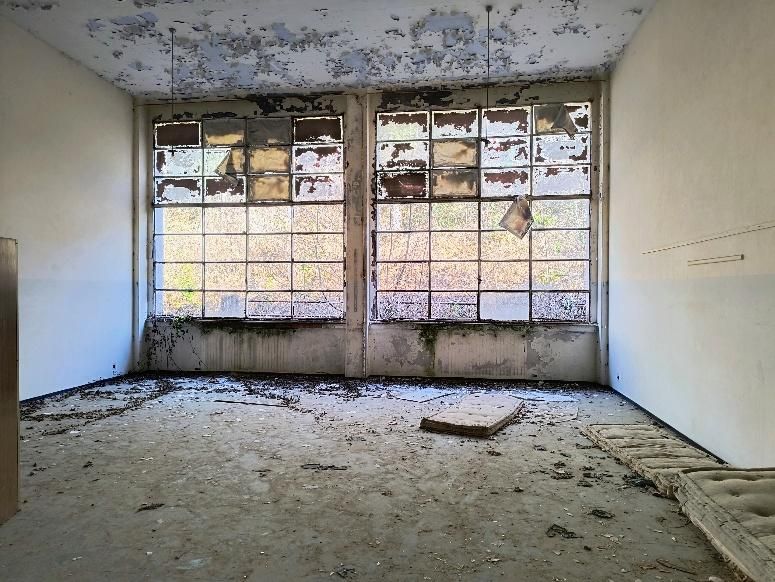
One of the seven classrooms created in the hall of the Dux pavilion, before June 2026. SciesopoliLab Impresa Sociale S.r.l.; progetto di Paolo Vietti-Violi 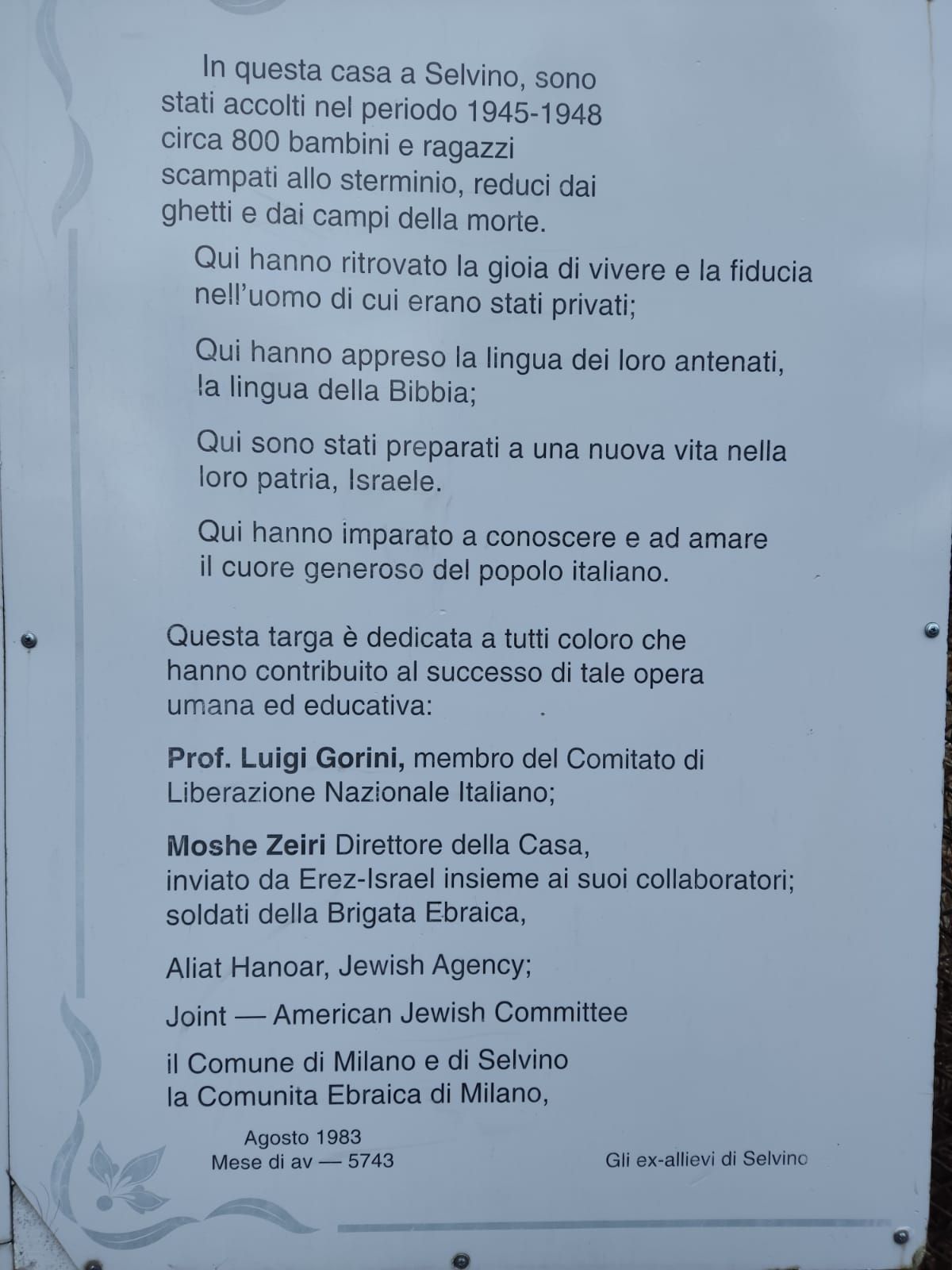
The plaque of August 1983, Italian text. DL67, Wikimedia Commons, CC BY-SA 4.0 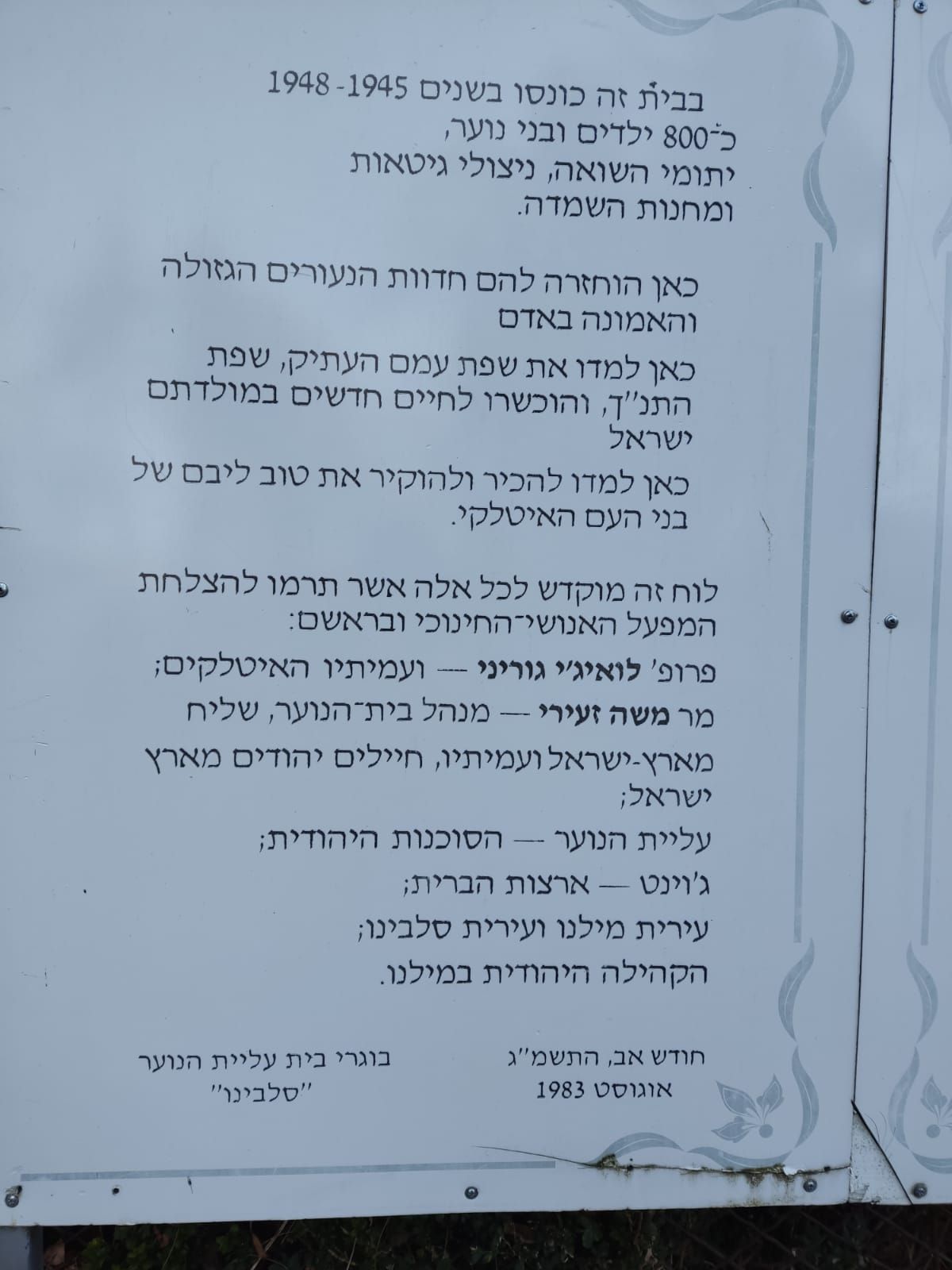
The plaque of August 1983, Hebrew text. DL67, Wikimedia Commons, CC BY-SA 4.0
Videos and testimonies
On YouTube, on the channels of those who made them.
- Target, “Nel cuore di Sciesopoli” by Aurora Cantini
Antenna 2 TV · 2021 · 18 min 26 s · Italian
Interview with the author of the book on the colony.
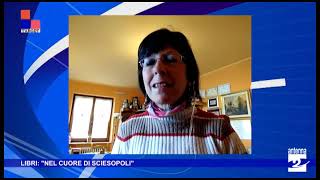
A video loads only when you press “Watch here”: from then on YouTube receives data about your visit, as explained on the Privacy page.
Key dates
- 5 October 1948
- The Foundation resolves to entrust the colony to the Pio Istituto Santa Corona for fifteen years, from the day it is vacated; a primary school will run inside (Ribolletti 2019, p. 116; 2015 decree)
- 24 December 1954
- Decree no. 1521 of the President of the Republic changes the Foundation's name and aims: it becomes the Opera pia per l'assistenza climatica all'infanzia, and the colony becomes the Istituto Climatico Permanente di Selvino (Gazzetta Ufficiale no. 93 of 22 April 1955; 2015 decree)
- 1955
- With Santa Corona gone at the end of 1954, the Opera pia runs the institute itself (Pirazzoli 2024, p. 267; 2015 decree)
- 1963–1965
- Renovation: the hall of the Dux is divided into classrooms and the swimming pool is closed (2015 decree)
- 22 December 1965
- A resolution assigns the institute to the children of the City of Milan for tuberculosis vaccination (Ribolletti 2019, p. 118)
- February–March 1978
- The City does not renew the agreement; the workers occupy the institute and the body suspends its activity; then the institute reopens (Ribolletti 2019, p. 118)
- 1979
- The Opera pia starts “Scuola Natura” with the City of Milan (Ribolletti 2019, p. 118; 2015 decree)
- 1980–1983
- The home hosts a few refugee families who had fled Vietnam (Pirazzoli 2024, p. 269)
- early 1980s
- Children with blood diseases arrive, for treatment in a protected place (Pirazzoli 2024, p. 269)
- August 1983
- About seventy of the Children of Selvino come back; a plaque is put up (Megged 1984; 2015 decree)
- 7 October 1985
- With a deficit of 740 million lire, the body resolves to close the institute (Ribolletti 2019, p. 118; 2015 decree)
People
- Luigi Gorini, commissioner of the Fondazione Tonoli e Melloni from 1945; proposed merging other charities into it (Ribolletti 2019, pp. 108, 117; 2015 decree)
- Vinicio Grigis, mayor of Selvino, welcomed the Children of Selvino back in 1983 (2015 decree)
- Aharon Megged, Israeli writer, took part in the return of 1983 and collected the stories of the Children of Selvino (Pirazzoli 2024, p. 265; letter by Leah Ben-Dov Spivak, 1983)
Sources
- Segretariato regionale MiBACT per la Lombardia, decreto di dichiarazione dell'interesse culturale della «Ex Colonia Montana Sciesopoli», 25 novembre 2015, relazione storico-artistica.
- E. Pirazzoli, «L'orizzonte dopo la catastrofe. Sciesopoli da colonia fascista a centro per giovani profughi ebrei, e oltre», in_bo, 15/19, 2024.
- S. Baldi (a cura di), Istituto Assistenza ai Minori e agli Anziani. Memorie e immagini di assistenza e solidarietà, Nexo, 2003 (citato nel decreto del 2015 e da Ribolletti 2019).
- Decreto del presidente della Repubblica 24 dicembre 1954, n. 1521, sunto nella Gazzetta Ufficiale n. 93 del 22 aprile 1955.
- S. Ribolletti, «Con la volontà dura come la roccia». Sciesopoli, una «colonia alpina per i bimbi del popolo» nell'Italia fascista, RomaTrE-Press, 2019.
- J. Beckwith, D. Fraenkel, Luigi Gorini 1903–1976, National Academy of Sciences, Biographical Memoir, 1980.
- Comune di Selvino, pagina «Sciesopoli» del sito istituzionale, 2024.
- Lombardia Beni Culturali, scheda del soggetto produttore «Pio Istituto di Santa Corona» (MIDB0007D1).
- Casa dei Ragazzi IAMA, pagina «Chi siamo» del sito istituzionale, consultata il 28 ottobre 2026.
- A. Cantini, «Sciesopoli Selvino, quel palazzo dove i bambini di ogni tempo e di ogni luogo ritrovarono la libertà e il gioco», blog «Le Ali dell'Aurora», 24 settembre 2015.
- A. Cantini, «La Memoria di Sciesopoli Selvino», blog «Le Ali dell'Aurora», 31 gennaio 2020.
- A. Megged, Il viaggio verso la terra promessa. La storia dei bambini di Selvino, Mazzotta, 1997 (edizione originale in ebraico, Am Oved, 1984).
- L. Ben-Dov Spivak, lettera da Selvino dell'agosto 1983, con la traduzione inglese di M. Bisk, su sciesopoli.com, sito dell'Associazione Children of Selvino, 4 settembre 2015.
- Ritaglio di un quotidiano dell'agosto 1983, «Oggi il grazie degli “ex ragazzi” ebrei a Selvino che li accolse nel dopoguerra», riprodotto su sciesopoli.com.
- sciesopoli.com, sito dell'Associazione Children of Selvino, 12 gennaio 2018, necrologio di Olek Sarel.

Further reading
From 1934 to 1987 the former colony had a single owner, a Milanese welfare body. The other bodies leased it, ran it or sent children there, without ever owning it.
Collecting memories
We are collecting memories, photographs and documents from people who lived or worked in the former colony in Selvino, to tell its whole story.